
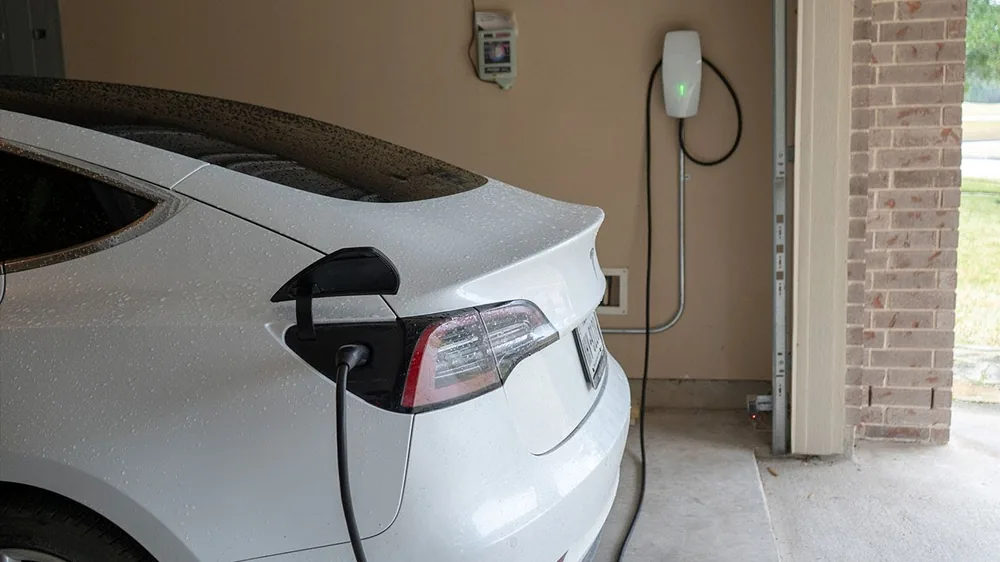
Choose a home charging setup around your daily driving and the time your vehicle spends parked. A higher charging rate is useful only when the vehicle, charging equipment, and electrical installation support it.
Level 1 and Level 2
Level 1 charging uses a suitable 120-volt connection. Level 2 uses 240 volts in a typical home and generally adds charge faster. Charging time still varies with the vehicle’s onboard charger, battery state, equipment settings, and circuit capacity. There is no single miles-per-hour figure that applies to every car.
The U.S. Department of Energy’s home charging guidance explains these options and why installation planning matters.
Does Level 2 require a panel upgrade?
Not always. We review the existing service and loads, charger rating, wiring route, and potential load-management options. Empty breaker spaces alone do not prove there is enough capacity. Hardwired and receptacle-connected equipment have different requirements, so select the installation method before buying accessories.
Prepare for your estimate
Share the vehicle and charger model, preferred parking location, and photographs of safely accessible panel labels. Do not remove covers. We then discuss capacity, routing, equipment placement, permit coordination, and the installation scope.
Check incentives separately
Do not rely on older rebate amounts or expired federal credits when budgeting. See our updated incentive guide and verify eligibility with the program administrator.
Explore EV charger installation in Covina or request a home charging estimate.