
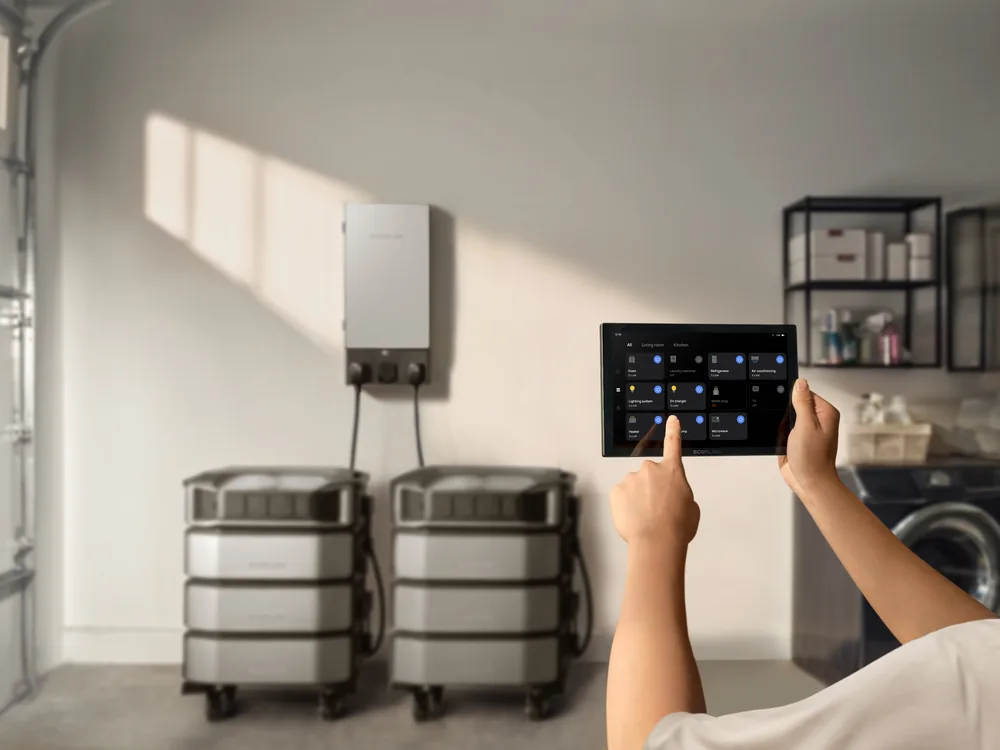
A home battery can keep selected electrical loads available during an outage when it is paired with compatible transfer equipment and designed for that use. The right system starts with what you want to power and for how long.
Start with essential loads
List refrigeration, lighting, internet equipment, and other priorities. Large loads such as air conditioning, cooking equipment, and EV charging can change the size and cost of a backup system. Starting power, simultaneous demand, usable battery capacity, and recharge options all affect the design.
Essential circuits or broader home coverage?
Backing up selected circuits may meet your needs with less equipment. Broader coverage needs a careful load review and may still require managing what operates at the same time. “Whole-home” does not mean every appliance can run indefinitely. We discuss expected runtime for the proposed loads rather than promise a fixed number of days.
Our experience
EcoFlow is our strongest area of familiarity. We are an EcoFlow Certified Installer/Dealer and also have Tesla and Jackery installer certifications, with familiarity with Anker products. Product compatibility and the scope of installation are confirmed for each project; these general credentials do not imply authorization for every model.
What to expect
We review existing equipment, intended loads, installation location, transfer requirements, and permit or utility coordination as applicable. Bill savings depend on rates, operating settings, and usage; they are not guaranteed. Medical or life-support equipment needs a separate continuity plan developed with the equipment provider and care team.
Read our battery backup and energy service page or request an assessment.