
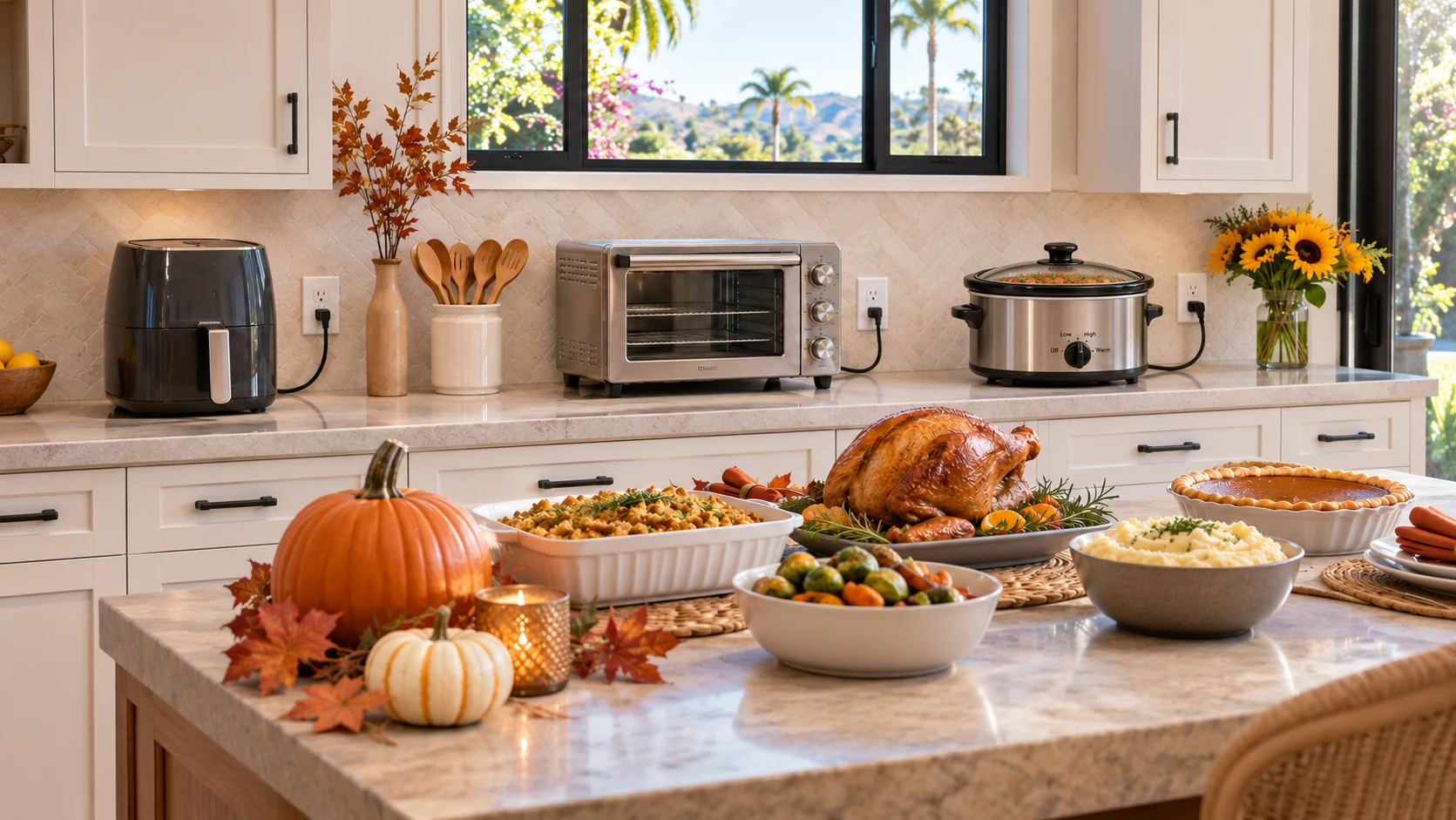
The turkey is roasting, the Crock-Pot is keeping a side dish warm, and the air fryer is finishing another. Someone switches on the countertop oven—and part of the kitchen loses power.
Sound familiar? Holiday cooking can put more demand on your kitchen’s electrical circuits than an ordinary dinner. When several appliances run together, a shared circuit can become overloaded and trip the breaker.
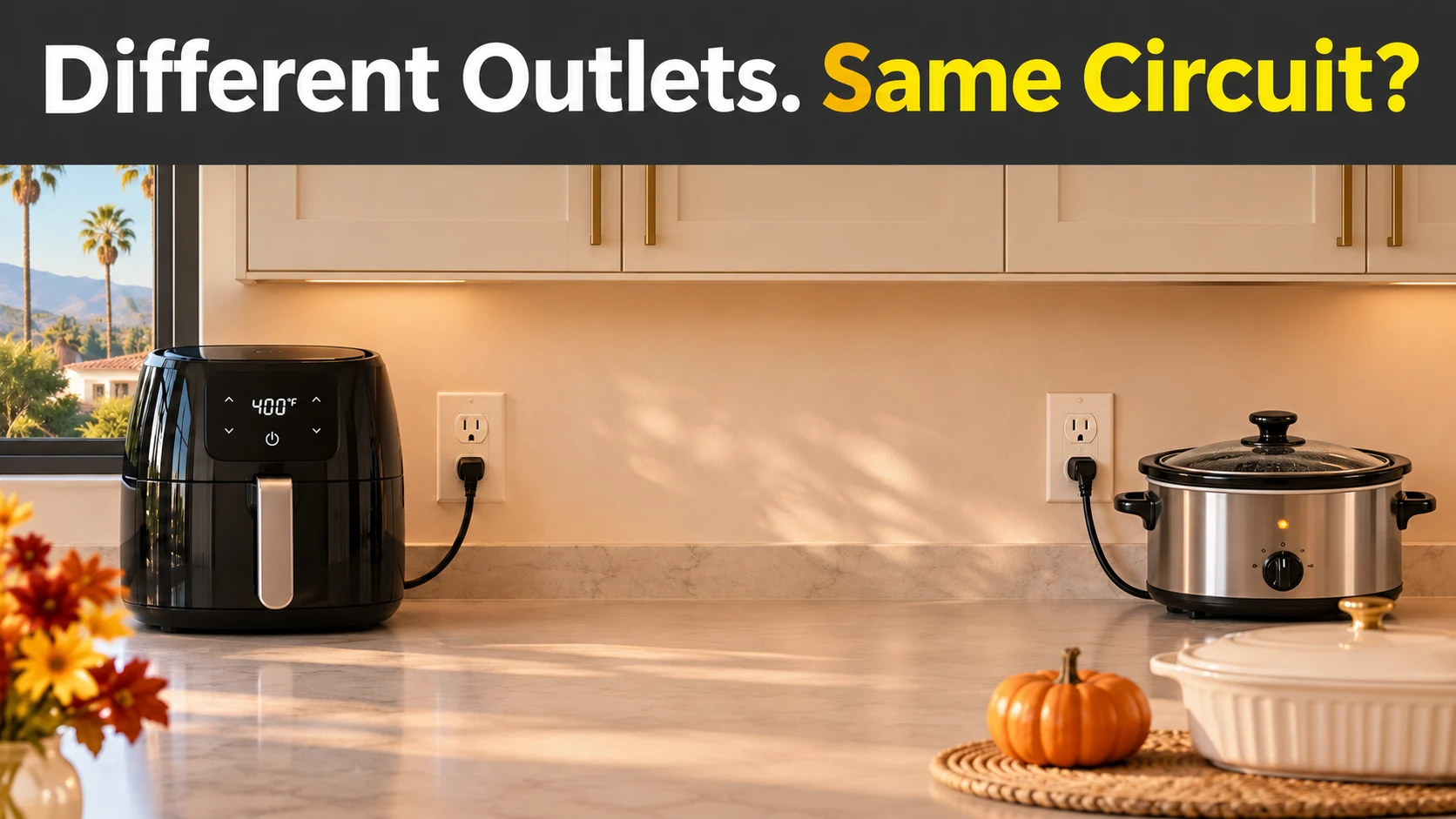
Different outlets don’t always mean different circuits.
This is what catches many homeowners off guard. You might have the air fryer plugged in beside the stove and the countertop oven plugged in across the kitchen, but those outlets could share the same circuit.
Think of the circuit as a shared power budget. Every appliance running on it uses part of that budget. Moving an appliance to another outlet only helps if that outlet is on a different circuit with enough available capacity.
Small appliances can have a big appetite for power.
An appliance doesn’t have to be large to draw a lot of electricity. Air fryers, electric griddles, toasters, and countertop ovens can place a substantial demand on a circuit. A slow cooker typically uses less power, but it still contributes to the total. Check each appliance’s label rather than judging by size.
For example, a 1,500-watt air fryer and a 1,200-watt countertop appliance together draw approximately 22.5 amps at 120 volts. That exceeds a 20-amp circuit’s rating, even before anything else on that circuit is counted. Actual wattage varies, and a breaker may not trip immediately.
The breaker is doing an important job.
When a breaker trips because of an overload, it interrupts power to help protect the wiring from overheating. Repeatedly resetting it while leaving the same appliances running doesn’t fix the overload.
Installing a larger breaker is not a shortcut. The breaker must be properly matched to the wiring and circuit. Not every trip is an overload, either: a faulty appliance, damaged wiring, or another electrical problem may need attention.
A little planning can help keep dinner on track.
- Stagger your cooking. Let one high-powered countertop appliance finish before starting another on the same circuit.
- Plug cooking appliances directly into wall outlets. Power strips and extension cords don’t add circuit capacity.
- Know which outlets share a circuit. Having several outlets doesn’t mean each one has its own supply.
- Pay attention to warning signs. Frequent trips, warm or discolored outlets, buzzing, or burning smells deserve professional attention. Stop using the affected outlet or appliance.
The National Fire Protection Association’s electrical safety guidance recommends using only one heat-producing appliance per receptacle outlet at a time and contacting a qualified electrician about recurring trips or warm outlets.
When is it time for an electrical upgrade?
If your kitchen regularly struggles with the appliances you use, have its circuits evaluated. Depending on what we find, the solution may involve correcting a connection, replacing a damaged device, or adding a dedicated circuit.
A tripping kitchen breaker doesn’t automatically mean you need a whole new panel. The first step is understanding the cause and what your kitchen actually needs. For more on the difference, read what a panel upgrade really changes.
At Specialized Electrical Solutions LLC, we help homeowners in Covina and surrounding Southern California communities identify electrical issues and plan practical improvements—so your kitchen is ready for everyday meals and a house full of holiday guests.
Request an electrical evaluation or contact SES about your kitchen.
No Problems, Only Solutions.
Images are AI-generated illustrations.